Alyosha's speech at Ilusha's stone
The Brothers KaramazovAlyosha’s speech at Ilusha’s stone is the closing act of remembrance that transforms the boys’ mourning into a mutual pledge. Beside the large stone under which Ilusha had once been meant to be buried, Alyosha recalls the boy’s love for his father and asks his former schoolfellows to remember not only Ilusha, but also one another. His address makes their shared past a source of moral guidance: the boys once threw stones at Ilusha, then grew fond of him, and must carry that change in feeling into the lives ahead.
The Stone and the Recalled Wound
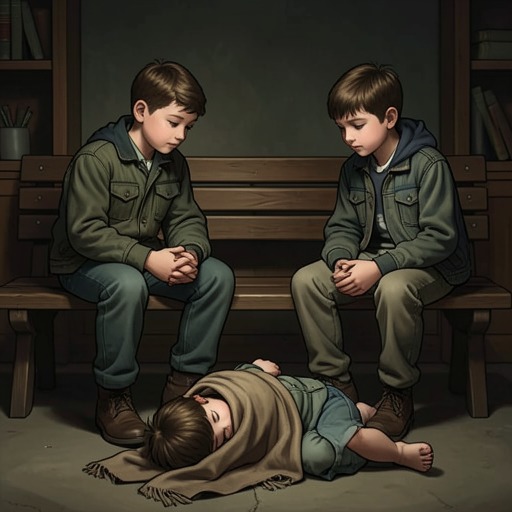
The speech begins during a slow walk along the path. Smurov recognizes the stone and points out that it was the place under which the boys had wanted to bury Ilusha. They stop. For Alyosha, the stone brings back the scene described by Snegiryov: Ilusha, weeping and embracing his father, had cried out against the insult to him. The remembered image gives the gathering a specific center. Ilusha’s grief was bound up with his father’s humiliation, and the boys are asked to understand his courage through that loyalty.
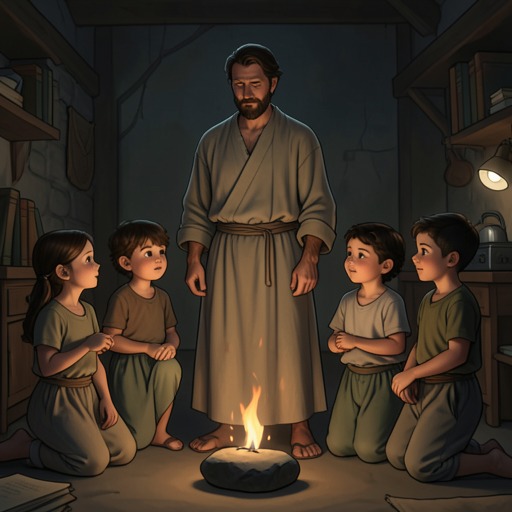
Alyosha looks at Ilusha’s schoolfellows and asks to say a word there. The setting turns remembrance into a deliberate act: they have returned to the place associated with the boys’ earlier cruelty, but now stand together in affection for the boy they once harmed. The stone holds those two phases in the same view. Their fellowship does not erase the past; it depends on remembering how they changed.
A Pact Against Forgetting
Alyosha tells the boys that they will soon part. He expects to spend time with his two brothers: one is going to Siberia, while the other lies at death’s door. He may soon leave the town for a long time as well. Against these separations, he proposes a compact at Ilusha’s stone: they must never forget Ilusha or one another, even if twenty years pass without their meeting.
The proposed memory is deliberately concrete. Alyosha asks them to remember how they buried the poor boy at whom they once threw stones by the bridge, and how they later grew so fond of him. He calls Ilusha fine, kindhearted, and brave, emphasizing that the boy felt for his father’s honour and stood up against the cruel insult. In this account, Ilusha’s importance lies not simply in being mourned, but in the example that made the boys’ attachment possible: a child’s loyalty to his father drew them out of their earlier hostility and into sympathy.
Alyosha also refuses to limit the pact to an idealized childhood scene. The boys may later attain honour or fall into great misfortune; they may be occupied with important concerns. Whatever happens, he wants them to recall the good time when they were together and united by a good feeling. Their promise is therefore meant to survive both success and suffering, not merely to preserve a pleasant moment unchanged.
Childhood Memory as Moral Education
Alyosha anticipates that the boys may not understand his meaning fully. He says that he often speaks unintelligibly, but trusts that they will remember his words and agree with them later. He presents a good, sacred memory from childhood and home as something stronger and more wholesome for future life than instruction alone. If someone carries such memories into adulthood, Alyosha says, they can provide safety to the end of life; even one good memory can matter.
That claim grows directly from the scene’s history. The boys’ memory is not a lesson delivered from outside their experience: it contains their own wrongdoing, Ilusha’s suffering, his defence of his father, and their eventual love for him. Alyosha’s appeal asks them to keep all of that together. Remembering the boy means preserving both the harm they once inflicted and the affection that followed, so that the fellowship formed through grief can continue to shape their conduct.
When Alyosha says that the boys should be kind first, honest next, and should never forget one another, he makes the pact ethical as well as affectionate. He promises that he will remember each face before him, and asks the boys to keep a place for him in their hearts. The promise is reciprocal: he does not claim authority over their future so much as join his own future remembrance to theirs.
Ilusha’s Memory and the Boys’ Response
Alyosha names Ilusha as the one who united them in their kind feeling. He asks the boys to keep a place in their hearts for him and to let his memory live there forever. They answer together, their voices ringing and their faces softened. The response shows the speech becoming a collective undertaking rather than remaining Alyosha’s private consolation.
The boys then specify what they will remember: Ilusha’s face and clothes, his poor little boots, his coffin, his unhappy and sinful father, and the way Ilusha had stood alone against the whole school. These details keep the pledge close to the material circumstances of the loss. Their remembrance includes the boy’s vulnerability and poverty, his family’s sorrow, and his brave defence of his father; the boys answer that he was brave and good. Kolya, overcome by affection, exclaims that he loved Ilusha.
Alyosha renews the wish that the dead boy’s memory live forever, and the boys echo him. Kolya then asks whether religious teaching is true: will they all rise from the dead and see one another again, including Ilusha? The question brings the boys’ hope of reunion into the scene without resolving it through proof. The speech’s promise of remembrance remains available now, while the question of resurrection gives their imagined future meeting a religious horizon.
From Promise to Fellowship
The gathering ends not in solemn stillness but in movement. Alyosha laughs about the old custom of eating pancakes and invites the boys to go. He proposes that they go hand in hand, and Kolya turns that gesture into a further promise: always hand in hand, throughout their lives. His cry of Hurrah for Karamazov is taken up by the others.
The movement from the stone to the joined hands gives the speech its final shape. The boys do not stay fixed beside the place of burial; they carry the memory away together. Their pact preserves Ilusha’s place among them, but it also makes their own friendship the continuing consequence of his life and death. Alyosha’s address thus closes on a bond expressed both in words and in a simple shared action: the boys leave together, determined to remember the child who first united them.